
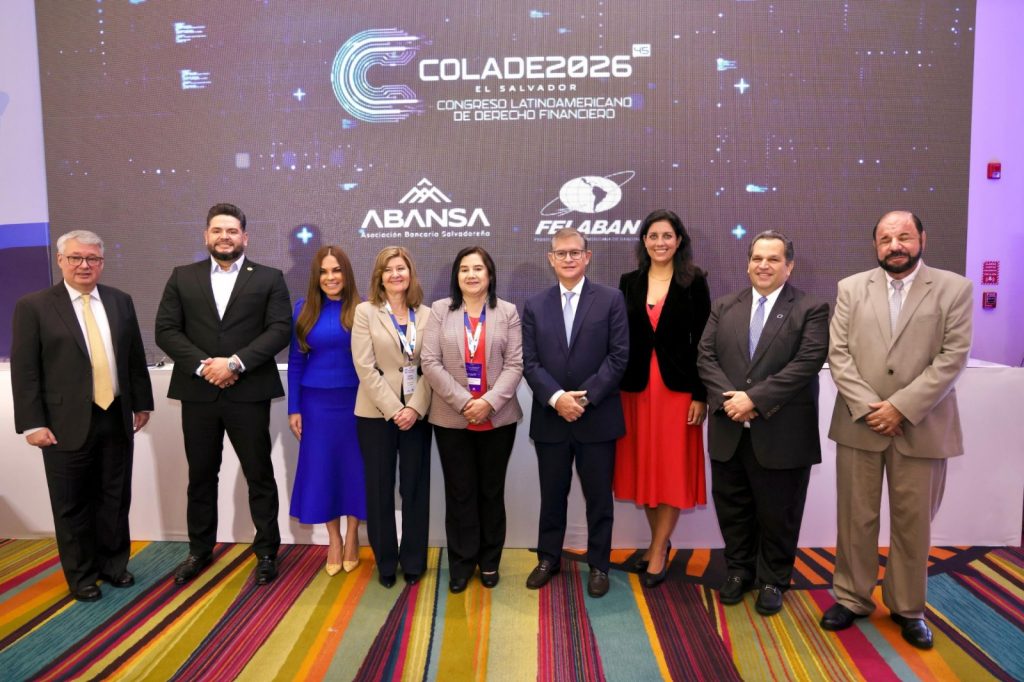
Almudena de la Mata Explores the Future of Financial Regulation and Banking at COLADE 2026
What happens when algorithms transform banking faster than regulation can keep up? Who supervises the systems reshaping financial services, and how can banks embrace innovation without losing sight of their responsibility to society?
These were among the questions at the heart of COLADE 2026, where Almudena de la Mata, Founder and CEO of Blockchain Intelligence, participated as both a keynote speaker and moderator.
Her contributions addressed two sides of the same transformation: how technology is redefining financial regulation and how banking institutions are rethinking their role in an increasingly digital world.
The Future of Financial Regulation: From Traditional Frameworks to Technological Innovation
In her keynote address, “The Evolution and Technological Advancement of Banking and Financial Services: The Future of Financial Regulation,” Almudena examined the regulatory trends and technological developments reshaping the financial sector.
Her perspective draws on experience across three interconnected areas: understanding regulation from within a central bank, applying it in multinational banking, and now exploring how technology can transform regulatory and supervisory practices.
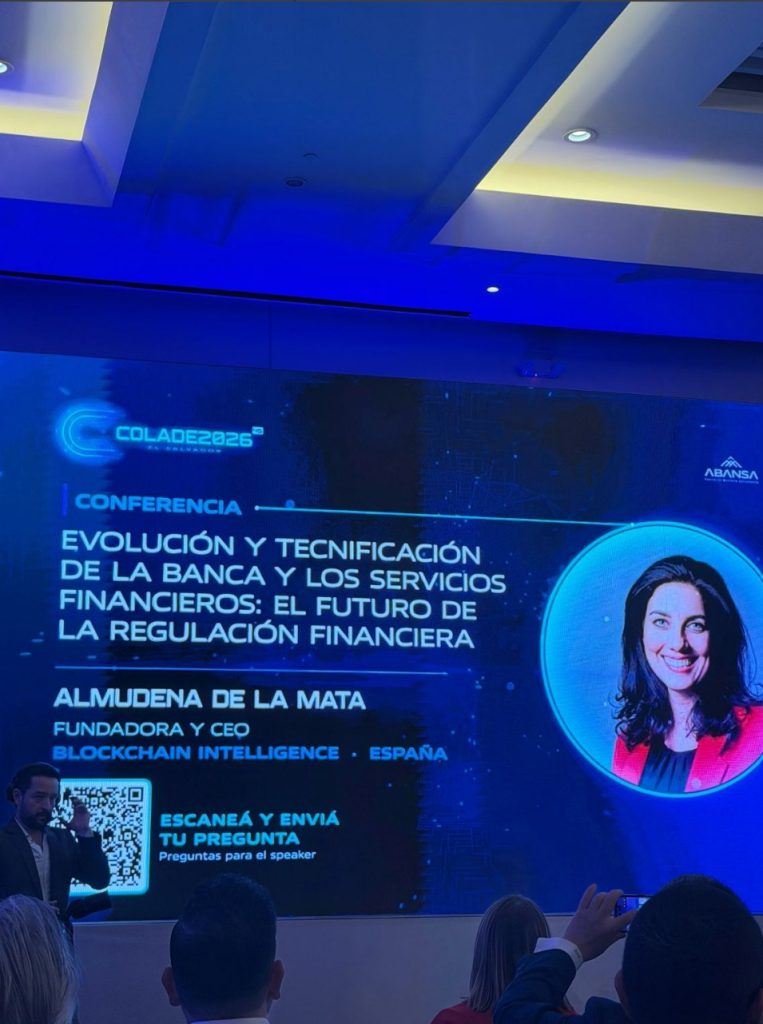
The keynote focused on RegTech (Regulatory Technology) and SupTech (Supervisory Technology), examining how artificial intelligence (AI) and big data can support risk management, automate compliance processes and transform financial supervision in the digital era.
As financial services become increasingly technology-driven, these developments raise important questions about how regulatory frameworks can evolve alongside innovation, ensuring effective oversight while providing the legal certainty needed for the responsible development of new financial models.
The Future of Banking in the Age of Algorithms
Almudena also moderated the session “The Future of Financial Law: Challenges and New Horizons,” which explored a central question for the financial sector: Where is banking heading in the age of algorithms?
The discussion brought together senior executives from three leading financial institutions in El Salvador:
– Rafael Barraza Domínguez, Executive President of Bancoagrícola.
– Fernando González Paz, Executive President of BAC.
– Gerardo Simán Siri, Executive President of Davivienda El Salvador.
The panel examined how banking institutions are redefining their purpose as social and economic actors in a rapidly changing environment. Discussions addressed the coexistence of traditional banking with emerging digital ecosystems and the challenge of leading people-centred organizations in an increasingly automated world.

A central theme was the strategic role of legal and technological frameworks in shaping the future of financial institutions. Beyond adopting new technologies, banks face the challenge of ensuring that their strategies contribute to the development of people and the country, supporting El Salvador’s economic and social progress towards 2030.
Connecting Law, Finance and Technology
Almudena de la Mata’s participation at COLADE 2026 reflects the growing importance of an integrated approach to financial regulation—one that combines legal expertise, knowledge of financial institutions and an understanding of technological innovation.
At the intersection of these fields, Blockchain Intelligence works on the challenges and opportunities associated with blockchain, digital assets, tokenization and emerging technologies, contributing to the dialogue on how regulation and financial services can adapt to a changing digital economy.
As technology continues to reshape financial markets, collaboration between legal experts, financial institutions and technology specialists will remain essential to developing regulatory approaches that support innovation, effective supervision and sustainable economic development.